IMG_20190323_110828_6

THE ONLY MESSAGE MY PEOPLE WOULD LISTEN TO IN 2020 IS WHEN THEY CAN TRAVEL ON TARRED ROAD FROM BOLGA TO WA-PARAMOUNT CHIEF OF TUMU TRADITIONAL AREA TO PRESIDENT AKUFFO ADDO

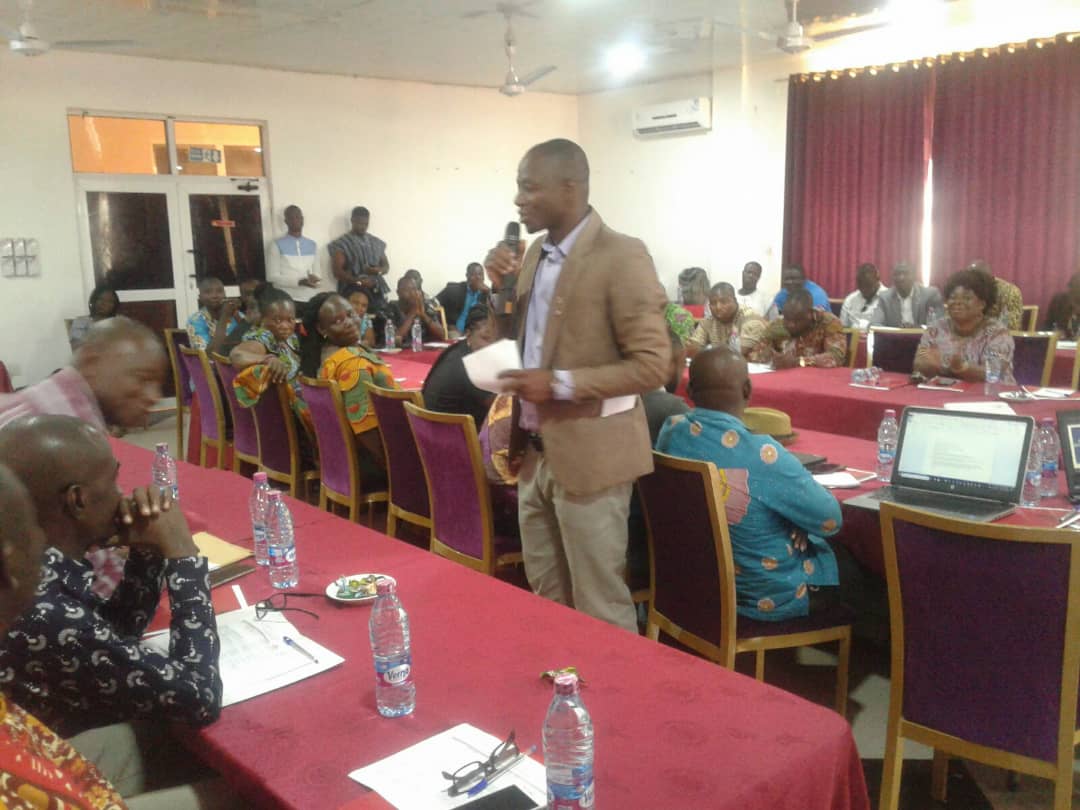
The Paramount Chief of the Tumu Traditional Area, Kuoro Richard Babini Kanton VI at the occasion of the annual Paari Gbielle festival of the chiefs and people of the Tumu traditional area on 23rd March, 2019, indicated in his address that, the only message his people would listen to in 2020 is when they can travel on tarred road from Bolga to Wa.
Kuoro Kanton VI noted that, the Sissala Area is a food basket in the Upper West Region and the country as a whole but the road networks linking the communities to the Municipal Capital are among the poorest in the region. He said, many of the communities do not have access roads and those with access roads are very deplorable with broken-down bridges and culverts which makes traveling very difficult and risky. He therefore called on government to work on most of the roads especially, the major road linking the Upper East Region and the Upper West Region
Whiles expressing his heartfelt appreciation to the President for elevating Tumu to a Municipal status, he again appealed to government to consider creating a second constituency for the Municipality before 2020 general election, since the total land area for the Municipality is so wide and would not make one Member of Parliament very effective.
He indicated that, Tumu Senior High Technical School, one of the two Senior High Schools in Tumu Municipality, is located in the heart of the town without a fence wall. He made a passionate appeal to the President to consider constructing a fence wall around the school to prevent encroachment and also make the environment conducive for teaching and learning
On his part, the President of the Republic, Nana Addo Dankwa Akufo-Addo, reiterated the commitment and determination of his government to bringing development to all parts of this country, without discrimination.
In his remarks, after receiving the title of “Nandong Tenge”, meaning “Reliable Friend”, President Akufo-Addo thanked the Tumu Kuoro, Richard Babini Kanton VI, Paramount Chief of the Tumu Traditional Area, for acknowledging the work of his government in several aspects of life in Sissala East, and, indeed, in Tumu.
In education, President Akufo-Addo noted that, in addition to guaranteeing access to a minimum of senior high school education for school-going children in Sissala East and Tumu, government is constructing a two storey 12-unit classroom block at Tumu Technical Senior High School.
“We have constructed a 6-unit classroom block at Kanton Senior High School, work is ongoing to complete a 1-storey 320 capacity girl’s dormitory block at Tumu Technical Senior High School, and we have opened a tender for the construction of another 320 capacity boy’s dormitory block at Tumu Technical Senior High School,” he added. The President indicated further that modern kindergarten blocks and basic classroom infrastructure, including 3-unit classroom blocks, have been constructed at Kowie, Challu and Kassana.

Touching on agriculture, and with Tumu being a bread basket for our nation, he commended the farmers of the area for their farsightedness and sense of progress in embracing the “Planting for Food and Jobs” programme. He explained that, as part of the programme, a total of 15 motor cycles have been presented to agricultural extension officers in the area to aid them in their work, whilst a contract has been awarded and the site handed over for the construction of a 1,000 metric tonne storage capacity warehouse in Tumu.
On water and sanitation, President Akufo-Addo noted that twenty (20) boreholes in different institutions in Sissala East have been constructed, and the Tumu town water system is in the process of being revamped, with construction and rehabilitation of pumps and expansion of the system ongoing. Similarly, he pointed that “we have constructed five (5) institutional toilet facilities at Kanton Senior High School, Tumu College of Education, Tumu Technical Senior High School, Tumu Community Centre, the Holy Child Senior High School and Walambele community. These were initiatives under the Ministry of Special Initiatives,” he added.
The President further indicated that the government has nearly completed a CHPS compound in Atase, and a 3-bedroom doctor’s residence. Again, the President noted that the construction of a new police station in Balu is almost complete.
President Akufo-Addo assured the Tumu Kuoro that, work will begin soon on the cotton ginnery in Tumu, with 10 dam sites, in Lilixi, Sakai, Jijen, Kulfuo, Challu Bechamboi, Duu, Dolinbizon, Wuru and Nabugubelle, handed over for construction under the 1 Village, 1 Dam programme.
“Two other additional dams are under construction under the Sustainable Land and Water Management Project so it brings to a total of 13 dams under construction here in Sissala East. I want to make the promise I made that, in my time, we are going to have all- year- farming in the Upper West, Upper East and all the northern sectors of our country. That is going to be one of the legacies I want to leave the people of Ghana, and we are on course to do that,” the President said.

On the request to construct fence walls around the two senior high schools in Tumu, President Akufo-Addo revealed that cabinet has issued directives for the Ministry of Education to construct fence walls around all SHS’s which are under threat of encroachment, and urged the schools to put in their request to the Minister for Education.

IMG_20190301_110043_7

MINERALS COMMISSION DOING A DISSERVICE TO THE UPPER WEST REGION- DEPUTY UPPER WEST REGIONAL MINISTER

The Deputy Upper West Regional Minister, Hon. Amidu Issahaku Chinnia, has called out the Minerals Commission (MC) for being lackadaisical in their approach in sensitizing residents to the activities of mining companies in the region; particularly Azumah Resources Limited.

Hon. Chinnia blamed the continuous misunderstanding and mistrust between some chiefs and their communities and Azumah Resources Limited on the Commission’s inability to dutifully execute its mandate.

Speaking at a stakeholder’s forum at Wa on the 1st of March 2018, to discuss the activities of Azumah Resources in the region, the Deputy Minister opined that the neutral intermediary role that the Minerals Commission is supposed to play has been absent over the years saying “the Commission should do more, than what you [Minerals Commission] are doing now because you are a neutral arbiter in this whole matter. There is some amount of mistrust between Azumah Resources and the communities.”

He continued to say that “as a neutral arbiter, you are supposed to bring out the issues clearly so that our people get a better understanding of what is happening on the ground. [This is] because, Azumah Resources as a company that is investing money; when they bring their side of the issues, it may not go down well with the communities. As a neutral arbiter who understands the issues well, you should do more.”
Hon. Chinnia was unhappy that the Minerals Commission would expect communities to make formal complaints on issues of compensation by the mining company before the Commission takes action.

The Deputy Minister explained that in a case where community members are ignorant of the benefits they can get from mining companies, the mining companies would take undue advantage of the people to the detriment of the community and the environment.

Mr. Chinnia expressed disappointment in the approach of the Commission saying the “Commission is not doing the region any good service because there are a lot of things you [Minerals Commission] sit on. There is so much confusion between Azumah Resources and the chiefs and it is not helping the region.”

Azumah Resources Limited is an exploration company focused on the highly prospective areas in the Upper West Region.

The organization currently has three Prospecting Licenses (PL) and one Mining Lease (ML).

IMG_20190228_105106_0

UPPER WEST REGIONAL INTER-COORDINATING COMMITTEE ON SANITATION (RICCS) REVIEWED RESULTS-BASED FINANCING ON SANITATION

The Upper West Regional Inter-Coordinating Committee on Sanitation (RICCS) and UNICEF Ghana has held a consultative meeting on Results-Based Financing (RBF) on sanitation; an effort to achieve Open Defecation Free (ODF) in the Region.
The Results-Based Financing concept is an instrument that links financing to pre-determined results, with payment made only upon verification that the agreed-upon results have actually been delivered.
The Deputy Upper West Regional Minister, Hon. Amidu Issahaku Chinnia, on Thursday 28th February 2019 told stakeholders working in the sanitation sector that, the Regional Coordinating Council would continue to support with its oversight role to uphold the dictates of social norms to ensure that people lived in a hygienic environment.
Making Ghana Open Defecation Free, he said, remained topmost priority of President Akufo-Addo’s administration and so it is up to officials at the RCC to making Upper West an ODF region.
UNICEF in partnership with the Government of Ghana rolled out the RBF concept last year with the commencement of expression of interest which was followed with evaluation exercises to assess the capacity of interested Municipal and District Assemblies (MDA) to implement it.
Hon. Chinnia said a report on the RBF evaluation indicates that only seven out of the 11 MDAs that applied, qualified to implement the concept based on past track records and their ability to deliver.
“I have been well briefed on the availability of funds of all the seven Municipal District Assemblies that qualified to undertake the implementation through the support of UNICEF based on its partnership with Government,” he said.

Hon. Chinnia said some performing districts that have already submitted communities for verification and the RICCS led by the Environmental Health and Sanitation Department have conducted verification in these communities.
The Nadowli-Kaleo District was praised for achieving ODF in nine out of 10 communities submitted for RICCS verification. This represented 90 percent of the target achieved.
The Minister appealed to non-RBF districts to hasten in working and submitting a list of communities for verification by the independent team.
Mr. Paul Avorkah, a Technical Director at the Ministry of Local Government and Rural Development, urged Environmental Officers to coordinate with UNICEF and government by working with communities to ensure that the region achieved ODF.
He said waiting on government to supervise the work of Environmental health Officers could create some “bottlenecks” and thereby, making it difficult for the region to achieve its ODF target by 2021.
Mr. Avorkah urged Environmental Health Science Practitioners and stakeholders on sanitation to “face the bull by the horns” by working tirelessly to attain ODF for the healthy living of the people.
Mr. Adamu Dasaana, a former District Chief Executive (DCE) for Wa West, called on traditional authorities to take opportunities of community durbars and social gatherings to sensitize residents on the health benefits of ODF.
He said, pictures, poster and stickers should be made available at vantage points and funeral grounds to inculcate in people the habit of ODF practices.

Director health service-Afreh

UPPER WEST REGION TOPS IN CHPS IMPLEMENTATION-GHANA HEALTH SERVICE REGIONAL DIRECTOR


A recent exercise undertaken by Ghana Health Service on Community-based Health Planning and Services (CHPS) verification and implementation has placed the Upper West Region first as the best performing region in CHPS implementation.
The Regional Directorate of Health Services (RDHS) achieved this feat by constructing new CHPS leading to a 63 percent increase in demarcated zones, training and deployment of Community Health Officers to man the CHPS zones and actively involving community health volunteers.
This came to light when the Upper West Regional Director of Health Services Dr. Osei Kuffuor Afreh addressed participants at the 2018 Annual Regional Health Sector Performance Review at Wa on the 4th of March 2019. The review conference was hinged on “The Role of Quality Data in Achieving Universal Health Coverage.”(title case).
Dr. Kuffuor Afreh disclosed that, in partnership with JICA, the RDHS is expanding the mandate of CHPS center. The new initiative dubbed ‘CHPS for Life” or “CHPS Plus” would address Universal Health Coverage for all. This would include pregnant women, children, adolescents, adults and appropriate care for the aged.
Dr. Kuffour Afreh was however, unhappy about some challenges the Service is faced with in redeeming claims from the National Health Insurance Authority (NHIA). He said the new policy by the Authority which requires the Ghana Health Service and other clients to generate codes to redeem claims is problematic in some parts of the region because of network failure.
He also implored the NHIA to consider setting up an office in the region to facilitate their business transactions saying “all claims are submitted at Tamale Claims Processing Centre, a situation we find unbearable and unfair since it poses a threat to staff availability for the service delivery amidst risk of travelling to and fro every month to Tamale.”
The Regional Director of Health Services expressed disappointment on the refusal of posting to the region and some district by some medical staff. Although the doctor/population ratio had increased marginally, Dr. Kuffuor Afreh believed more work needs to be done to encourage staff accept posting to rural areas. He said management has placed a temporary embargo on transferring staff out of the region because of the imbalance in in-postings and out-postings.
The Deputy Upper West Regional Minister, Hon. Amidu Issahaku Chinnia said the theme for the conference was very important as it stressed on the need for data. He said as Ghana has committed itself to achieve universal health coverage by 2030 as part of the Sustainable Development Goals (SDGs) the Ghana Health Service must be able to provide affordable, equitable and easily accessible heath care to all; a feat the Deputy Minister maintained cannot be achieved without accurate data.
Hon. Chinnia said professionalism is key to achieving the universal health coverage saying “let us not forget to change our negative attitudes towards work.”
He cited a recent study by the Community Development Alliance (CDA) in the Northern, Upper East and Upper West Regions which suggests that clients and residents perceive some health professionals to be corrupt and not dedicated to their work.
The Deputy Minister expressed gratitude to development partners like JICA and UNICEF for their continuous technical and logistical support to health service delivery in the region.
The review conference was attended by staff of the Ghana Health Service across the region, traditional authorities, religious leaders and some implementing partners of the Ghana Health Services.

IMG-20190222-WA0012

MINERALS COMMISSION DOING A DISSERVICE TO THE UPPER WEST REGION- DEPUTY UPPER WEST REGIONAL MINISTER

The Deputy Upper West Regional Minister, Hon. Amidu Issahaku Chinnia, has called out the Minerals Commission (MC) for being lackadaisical in their approach in sensitizing residents to the activities of mining companies in the region; particularly Azumah Resources Limited.

Hon. Chinnia blamed the continuous misunderstanding and mistrust between some chiefs and their communities and Azumah Resources Limited on the Commission’s inability to dutifully execute its mandate.

Speaking at a stakeholder’s forum at Wa on the 1st of March 2018, to discuss the activities of Azumah Resources in the region, the Deputy Minister opined that the neutral intermediary role that the Minerals Commission is supposed to play has been absent over the years saying “the Commission should do more, than what you [Minerals Commission] are doing now because you are a neutral arbiter in this whole matter. There is some amount of mistrust between Azumah Resources and the communities.”

He continued to say that “as a neutral arbiter, you are supposed to bring out the issues clearly so that our people get a better understanding of what is happening on the ground. [This is] because, Azumah Resources as a company that is investing money; when they bring their side of the issues, it may not go down well with the communities. As a neutral arbiter who understands the issues well, you should do more.”
Hon. Chinnia was unhappy that the Minerals Commission would expect communities to make formal complaints on issues of compensation by the mining company before the Commission takes action.

The Deputy Minister explained that in a case where community members are ignorant of the benefits they can get from mining companies, the mining companies would take undue advantage of the people to the detriment of the community and the environment.

Mr. Chinnia expressed disappointment in the approach of the Commission saying the “Commission is not doing the region any good service because there are a lot of things you [Minerals Commission] sit on. There is so much confusion between Azumah Resources and the chiefs and it is not helping the region.”

Azumah Resources Limited is an exploration company focused on the highly prospective areas in the Upper West Region.

The organization currently has three Prospecting Licenses (PL) and one Mining Lease (ML).

IMG_20190131_103935_7

UPPER WEST REGIONAL MINISTER LAUDS UNICEF FOR THEIR CONTINUES SUPPORT TO THE GOVERNMENT OF GHANA

The Upper West Regional Minister, Hon Alhaji Sulemana Alhassan lauded UNICEF for being a major development partner in the area of sanitation and hygiene and their support to the Government of Ghana in the development of a cost effective sanitation model based on the Community Led Total Sanitation (CLTS) approach. He said, the CLTS approach was adopted in the National Environmental Sanitation Policy (NESP) as the means of ensuring proper sanitation in rural and small towns. The Minister made this remark whiles addressing participants at a workshop on Environmental and Social Management Framework in Wa on the 31st January 2019.
Hon. Sulemana disclosed that the program is being implemented in five most deprived regions in Ghana namely, Upper West, Upper East, Northern, Volta and Central region. He said the program seeks to complement Government’s efforts in enhancing the livelihood and living conditions of the affected regions in Ghana. He added that, the Environmental and Social Management Framework (ESMF) has been developed with the support of Green Advocacy Ghana which is to help better manage the environmental and social issues as far as CLTS implementation is concerned.
The Minister noted that, the Environmental and Social Management Framework (ESMF) Provides the environment and social management arrangement for a sustainable implementation of the Rural Sanitation Model and Strategy (RSMS). He said this was with particular reference to activities with environmental and social implications under the model, and the corresponding environmental and social safeguard to mitigate potential cumulative impacts and risks, while enhancing opportunities and strategies.
He added that for Ghana to achieve the Sustainable Development Goals (SDGs):
Goal 3-Ensure healthy lives and promote well-being for all at all ages;
Goal 6-Clean water and sanitation; and
Goal 11-Sustainable cities and communities; we must attach more seriousness to the model.
The Hon. Regional Minister pledged his commitment and that of the Regional Coordinating Council to ensuring that the Environmental and Social Management Framework (ESMF) is implemented to improve upon the lives of the citizenry of the region. He reiterated that, Government cannot do it alone and that it requires concerted efforts of all Ghanaians to enable the president succeed in fulfilling his promise to restore hope to Ghanaians.

1549708369364_IMG_2927

ENRICH YOUR MENU WITH MORE LOCAL DISHES-DEPUTY DIRECTOR AT THE RCC URGED SERVICE PROVIDERS

The Deputy Director and Head of Central Administration at the Upper West Regional Coordinating Council, Miss. Fati Issaka Koray on Friday 22nd February 2019,urged Service providers to buy into the “See Ghana, Eat Ghana, Wear Ghana, Feel Ghana” campaign by enriching their menu with more local dishes.
Delivering an address on behalf of the Regional Minister at the 14th edition of the Upper West Regional Tourism Awards Night, Miss. Koray indicated that, this would certainly reduce the amount of money we spend on food import to service the tourism industry. According to her, we should also make conscious efforts to know our environment by visiting our tourist attraction sites and develop the habit of nature conservation. She said the Ghana Tourism Authority should encourage the formation of Tourist Clubs in the second cycle and tertiary institutions as well as in the churches, mosques and communities
She noted that, our rich culture is always displayed in colorful festivals, naming ceremonies, funerals and big occasions as well as places of worship. She said, increasingly, some of the youth have found their talents in the creative arts industry. “As artists, film or music producers, let us project our cherished values shaped by our heritage that can stand the test of time. I also challenge the artists to produce art work that depict our heritage sites that can be displayed in our homes, offices, hotels and restaurants” she added
Miss. Koray indicated that the Region abounds with an array of tourism resources which include: the Wechiau Community Hippo Sanctuary, the Gwollu Slave Defense Wall and Bone-setter Clinic, the Wa Naa’s Palace, the Nakore Ancient Mosque, the Wuling’s Mushroom-shaped Rock and other Heritage sites that attracts both domestic and international tourists. She said in 2018 for instance, the Wechiau Community Hippo Sanctuary recorded 1,024 arrivals out of which 505 were non-residents.
She indicated that Government would continue to provide the enabling environment by improving accessibility to the sites to attract the needed investment.
The Regional Tourism Award has become a flagship event in the tourism calendar of events which is celebrated every year to award distinguished tourism practitioners in the Region. It also set the tone for high standards in service delivery among practitioners in the tourism industry.
The Audit Manager of the Ghana Tourism Authority, Mr. Kenneth Adu-Boahene delivering a speech at the event on behalf of the Chief Executive Officer of the Ghana Tourism Authority indicated that the Ghana Tourism Authority launched a marketing campaign ‘See Ghana, Eat Ghana, Wear Ghana, Feel Ghana’ aimed at promoting domestic tourism, the nation’s culture and heritage on 30th June, 2017 which seeks to re-orient Ghanaians on a new sense of national pride way of life.
Mr. Adu-Boahene noted that the key objectives of the campaign was to develop a new and sustainable sense of nationalism that brings commercially viable and sustainable life, the concept “I AM GHANAIAN”, pull together existing and stalled efforts to rebrand and market Ghana locally, to the African Diaspora and the rest of the world; promote local business opportunities across Ghana and promote Made-in-Ghana goods. He said the See, Eat, Wear and Feel Ghana campaign has increased the tourism traffic both domestically and internationally.
The number of awards was twenty in different categories. This included: Hotel of the year(2 star), Hotel of the year(1 star), Hotel of the year(Budget), Restaurant of the year(Grade 1), Restaurant of the year(Grade 2), Traditional Caterer of the year, Drinking Bar of the year, Night club/pub of the year, Site Guide of the year, Tour Guide of the year, Visitor Attraction of the year, Consistent payment of Tourism Levy(Accommodation), Consistent payment of Tourism Levy(catering), Tourism oriented Media of the year(T.V, Radio, Print), Tourism Program of the year, Tourism writer of the year, Honorary Awards for supporter of Tourism Programs of the year, Emerging Exemplary Award for sustainable Eco-Tourism Community of the year and Historical Site of Anti-Slavery Award of the year.

IMG_20190213_135738_7

THREE COOPERATIVE GROUPS RECEIVED SUPPORT FROM KOICA

The Deputy Upper West Regional Minister, Hon Amidu Chinnia Issahaku on 13th February, 2019 handed over three tricycles to three cooperative groups at the forecourt of the Regional Coordinating Council. The donation is part of the bilateral collaboration between the Government of Ghana and Korea International Cooperation Agency (KOICA) to support women and youth groups in the Upper West Region.
According to the Team Leader of the project, Cornelius Kunkara, the project which is made up of seven components, is sponsored by Korea International Cooperation and implemented by ACDEP. He said, farmer groups are identified, trained for a week under the project and asked to submit business plans which are assessed and short-listed on merit. He added that winners emerged from the short-list and are given tricycles to support their rural transport, generate income for themselves and also help in cutting farm produce to and from their farms.
Mr. Kunkara indicated that, last year seven farmer groups benefited from the project and that monitoring mechanisms are put in place to ensure that the tricycles are well maintained and the group together with the community benefits from it. He hinted that more of such support would be coming this year in different phases.

STAFF DURBAR

UPPER WEST REGIONAL COORDINATING COUNCIL (RCC) HELD ITS FIRST STAFF DURBAR OF THE YEAR AS THE REGIONAL MINISTER CHARGED STAFF TO BE HARD WORKING AND COMMITTED TO THEIR WORK

The Upper West Regional Minister Hon. Alhassan Sulemana at the first 2019 staff durbar on Thursday, 17th January, 2019 called on staff of the Upper West Regional Coordinating Council to remain committed and hardworking in the discharge of their duties. The staff durbar that is held twice or thrice every year, creates the avenue for Staff and Management to interact, and address key issues bordering the organization by find lasting solutions to such concerns to enhance service delivery.
The Minister commended staff for their dedication to duty over the years and charged all staff to remain committed and go the extra miles in discharging their work schedule so as to improve service delivery in the year 2019. He added that, his observation during 2018 was that, many staff were hardworking whiles others were not as committed in the discharge of their duties at work as they could have been. He advised staff to put up their best whichever level they find themselves, and always try to share ideas at work and learn best practices from each other. “Wherever you find yourself at work, always try to be the pivot point or center of the organization and share ideas with one another because wisdom is not in one person’s mind. You might think you are the only one who knows much or you are the best at work until you get closer to others to share ideas” he noted.
Hon. Sulemana encouraged staff to be punctual at work and avoid rumor mongering and other unhealthy workplace practices. He said, rumor mongering breeds suspicions and leads to petty squabbles that kill organizational progress. The Minister assured staff that his doors were opened to all and called for all hands on deck in pushing the developmental agenda of the region forward in other to fulfil the vision of His Excellency the President for the Upper West Region.
The Deputy Director and Head of Central Administration, Mrs. Fati Issahaku Koray disclosed at the durbar that punctuality to work was a key area that would be monitored this year to enhance better service delivery and that officers who absent themselves from work without permission would be queried and sanctioned. She said such attitude retrogress organizational success and must be stopped. She also thanked the Regional Minister on behalf the staff for his open door policy that make him accessible to staff to address their issues.
A key challenge noted at the durbar was the lack of official vehicles for the Upper West Regional Coordinating Council. Consequently, staff of the RCC are calling on Government to as a matter of agency come to their aid by procuring some vehicles for the RCC. It was noted that the Regional Minister and his deputy are currently using old and weak V8 Land Cruiser registered 2010, and Toyota Prado respectively making maintenance expensive.

IMG-20190222-WA0011

Pass Bylaws On Houses Without Latrine- Upper West Deputy Regional Minister To MMDAs

The Upper West Deputy Regional Minister, Hon. Amidu Issahaku Chinnia on Tuesday, 6th November 2018 appealed to all MMDAs to pass bye-laws to compel people who construct compound houses to incorporate sanitation facilities in them. Hon Amidu Chinnia said this in his welcome address during a one day orientation workshop on district sanitation fund on 6th November, 2018 at Nuoyong Empire Hotel.

According to him, landlords constructs houses without sanitation facilities (latrines) thereby making it very difficult for tenants to observe proper sanitation.

“Pass bye-laws as one of the major means of changing the attitude of our people. We all come from communities, and various towns. We see the amount of money people invest in building compound houses and if I go to rent one or two rooms in someone’s compound house, you don’t expect me to build a latrine on my own. The owner of the compound house is supposed to make provision for a sanitation facility in that compound house.  I want to urge the MMDCEs and the Assemblies to pass bylaws to compel people who construct compound houses to incorporate sanitation facilities in these houses” he explained.

Hon. Chinnia indicated that, once people build houses without toilet facilities, the individuals who go to rent such houses would have no option than to do open defecation. He therefore charged the MMDCEs and the Assemblies to force people who invest in building houses for rentals to incorporate latrines and sanitation facilities in their plan.

He added that, considering the investment that we can make in the area of sanitation relative to the investment we make in curing people when they fall sick, it was better for us to choose the former. He said, we spend less investing in sanitation, then allow people to do open defecation and live in environments that are dirty and subsequently fall sick and government has to spend public funds to cure them.

He noted that, people who do their little investment and get some small money would have to spend all those funds in treating ailments as a result of poor sanitation. This is one challenge that continues to impoverish the people.

He advised that, the minds of the people should be orientated good in sanitation.

According to him, it was better to invest in improving our sanitation situation which invariably would cut down on sanitation related illnesses.

The sanitation marketing programme was a new module being introduced under the GOG-UNICEF WASH programme.  A key component of the sanitation marketing (SANMARK) Program will be the establishment of the District Sanitation fund.  This fund is a type of sanitation financing facility to be set aside by the District Assemblies aimed at providing financial support for the construction of household latrines in the Districts. Sources of funding for the district sanitation fund includes: (A) 2% of the District Assembly common fund. (B) Internal generated fund (c) Donor agencies; development partners and corperate bodies.

Mr. Chinnia Issahaku encouraged all MMDCEs to take advantage of the sanitation fund in solving sanitation problems in the various Districts. He said, sanitation has become one of the biggest challenge in Ghana, with a lot of development partners putting in a lot of funds trying to solve the problems but there is still no positive results.

He advised MMDCEs to immediately set up the fund and get desk officers or committees to manage it base on an annual plan.

“Once the sanitation fund is set up from the common fund and it is operational, the development partners would come in to give their support, and a lot of things can be done. We need to be creative and innovative enough in getting things done to support the Government rather than pocketing our hands waiting for common fund to come before something can be done” he added.